
How to Choose a Foam Pump
Choosing a foam pump should begin with the formula rather than the bottle design.
The pump may look attractive, but if the formulation cannot be mixed with air effectively, the finished packaging will not provide the intended foam.
Check Formula Viscosity
Foaming formulas are generally much lower in viscosity than products used with standard lotion pumps.
If the liquid is too thick, output may become inconsistent and foam quality may deteriorate.
For this reason, the actual formula should be provided or tested during sampling whenever possible.
Decide What Kind of Foam Experience You Want
Not every brand expects the same foam.
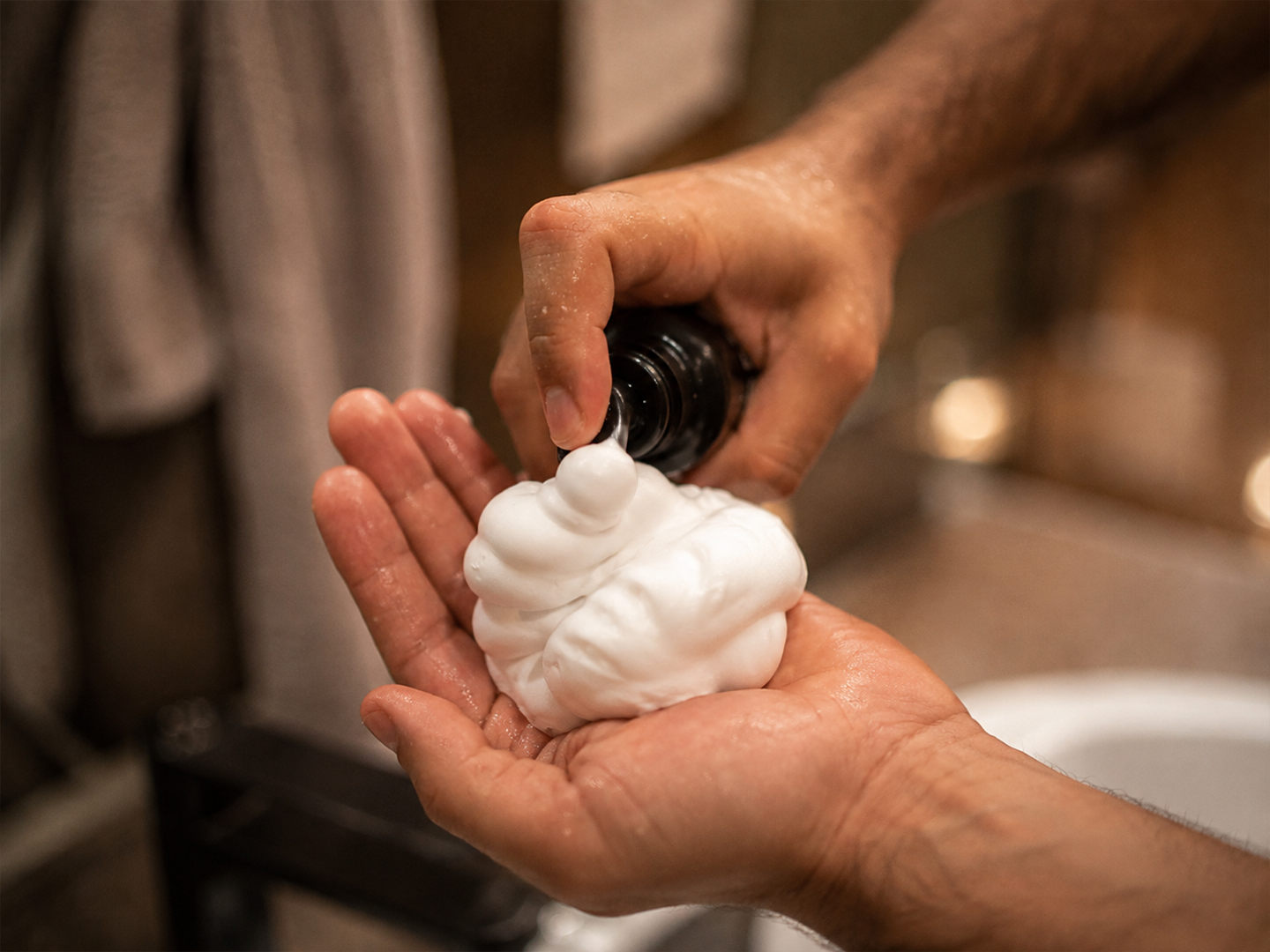
Some products are designed to produce a light, airy foam.
Others need a denser texture.
The pump design and formulation together determine the result.
A packaging supplier can provide pump samples, but final foam quality should always be confirmed with the production formula.
Match Dosage to Application
A facial cleanser may require a different amount per stroke from a hand wash.
Bottle volume should also be considered.
The dosage should provide enough product for normal use without causing excessive consumption.
Confirm Bottle Design
Foam pump bottles often require sufficient internal space and appropriate bottle construction.
The neck must match the pump, while the bottle should also provide a comfortable user experience during repeated dispensing.
Think About Transport
Locking systems can be particularly useful for pumps that will be shipped through retail or e-commerce channels.
Buyers should confirm how the pump will be locked during transportation and how the consumer will unlock it.
Test Before Mass Production
Foam performance should be evaluated after repeated use, not only during the first few strokes.
Storage testing is also useful because formulas may change over time.
For commercial packaging, this kind of testing reduces the risk of discovering foaming problems after finished products have already reached the market.