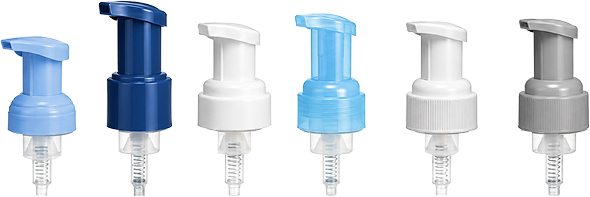
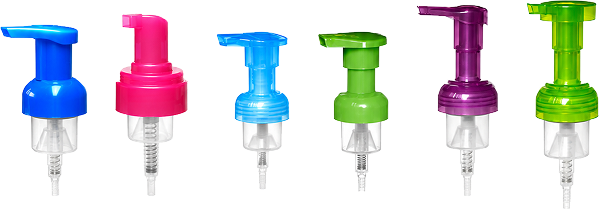
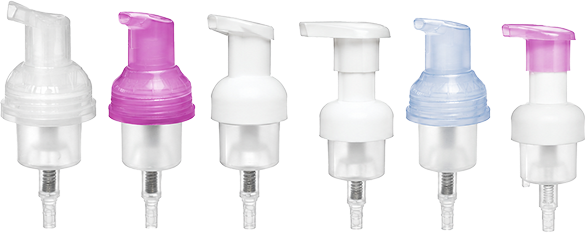
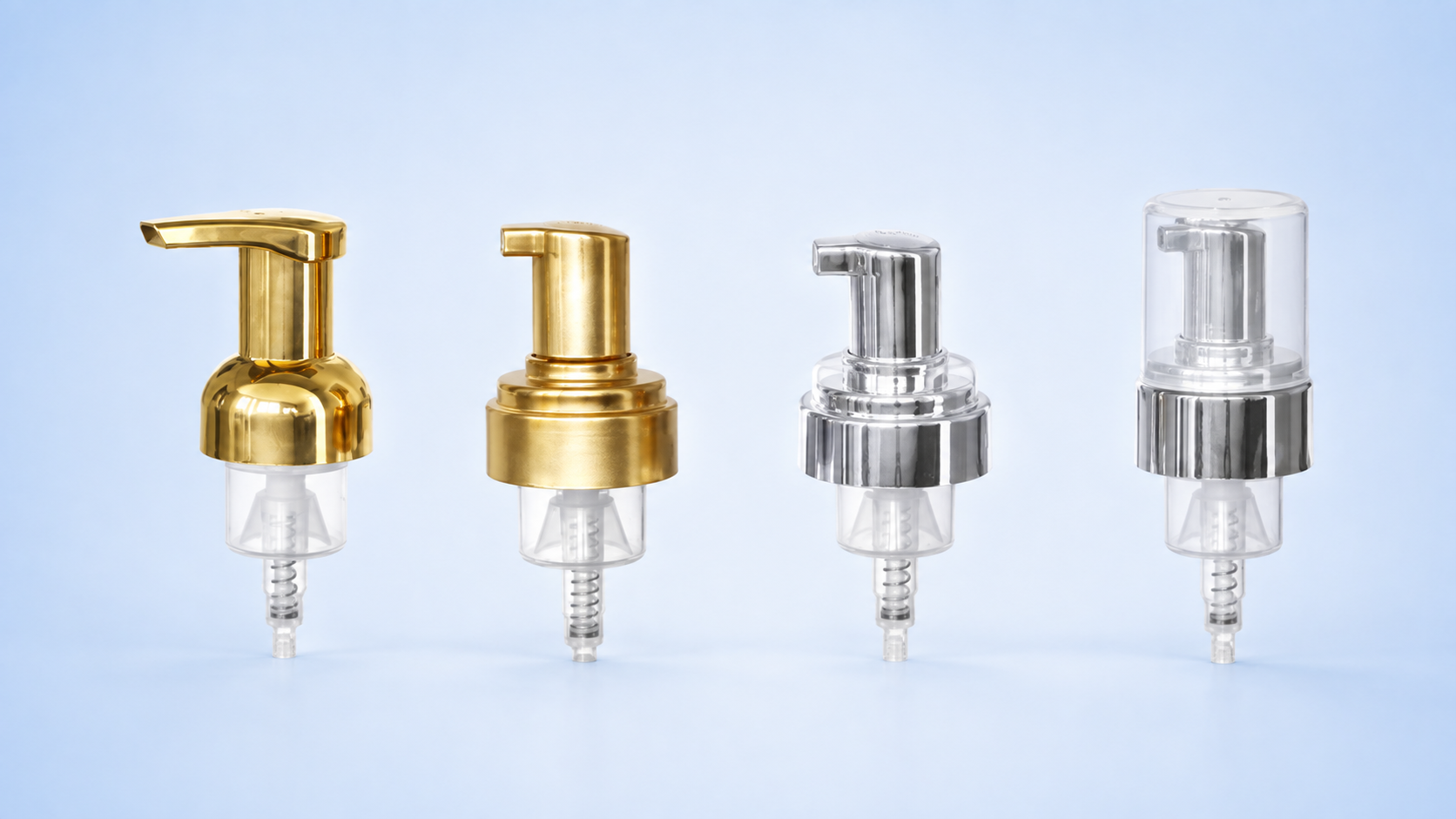
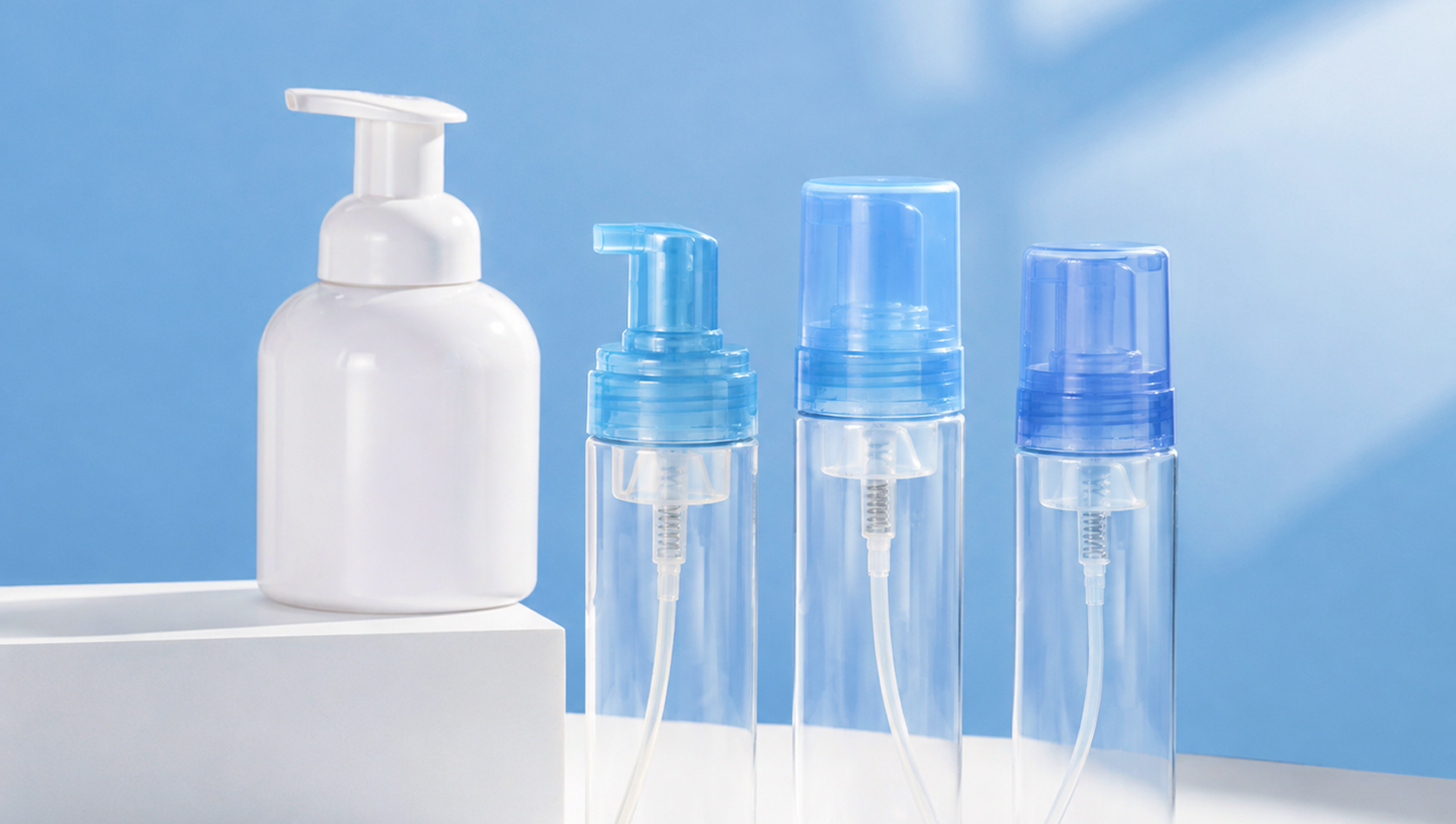
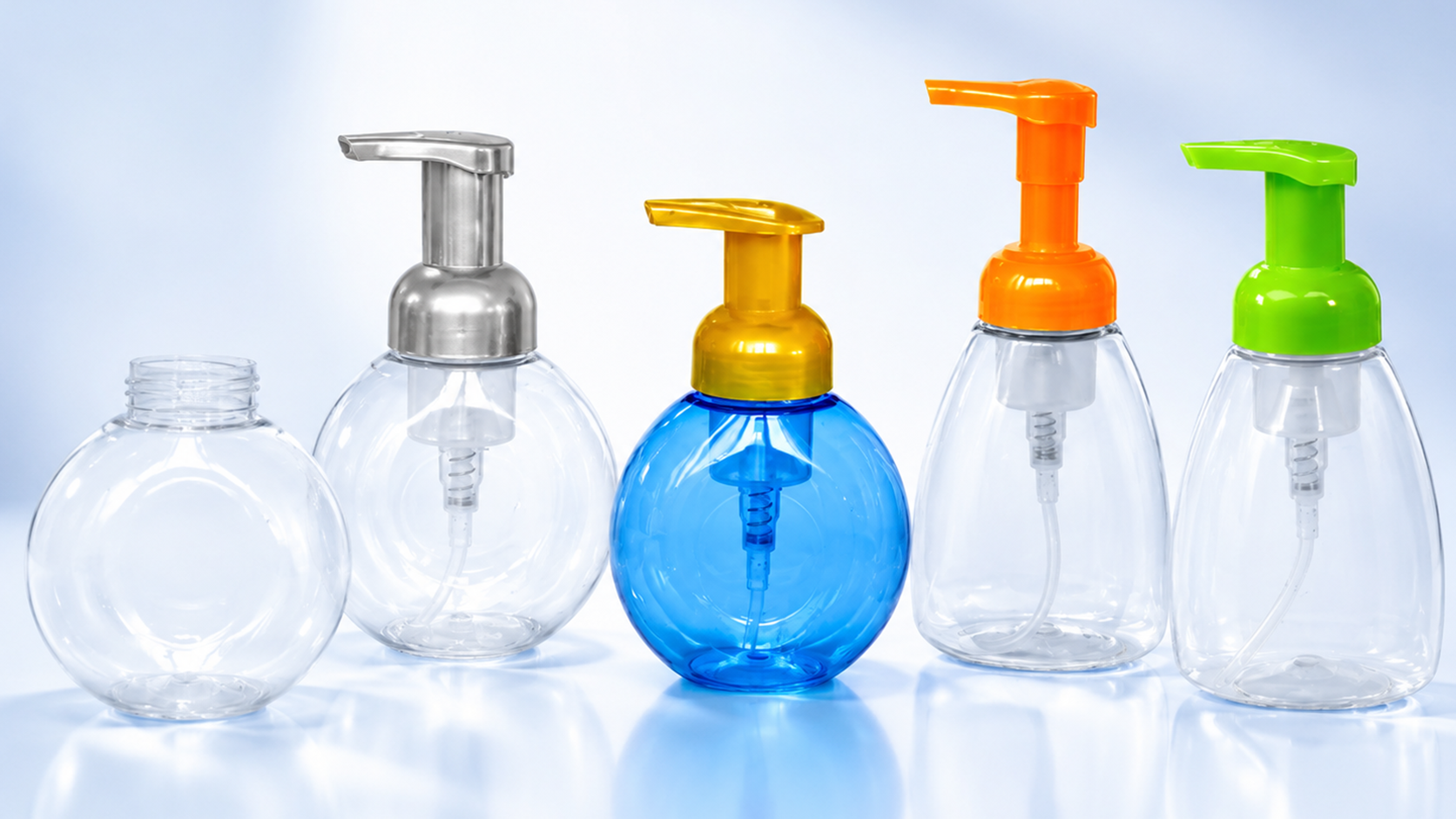
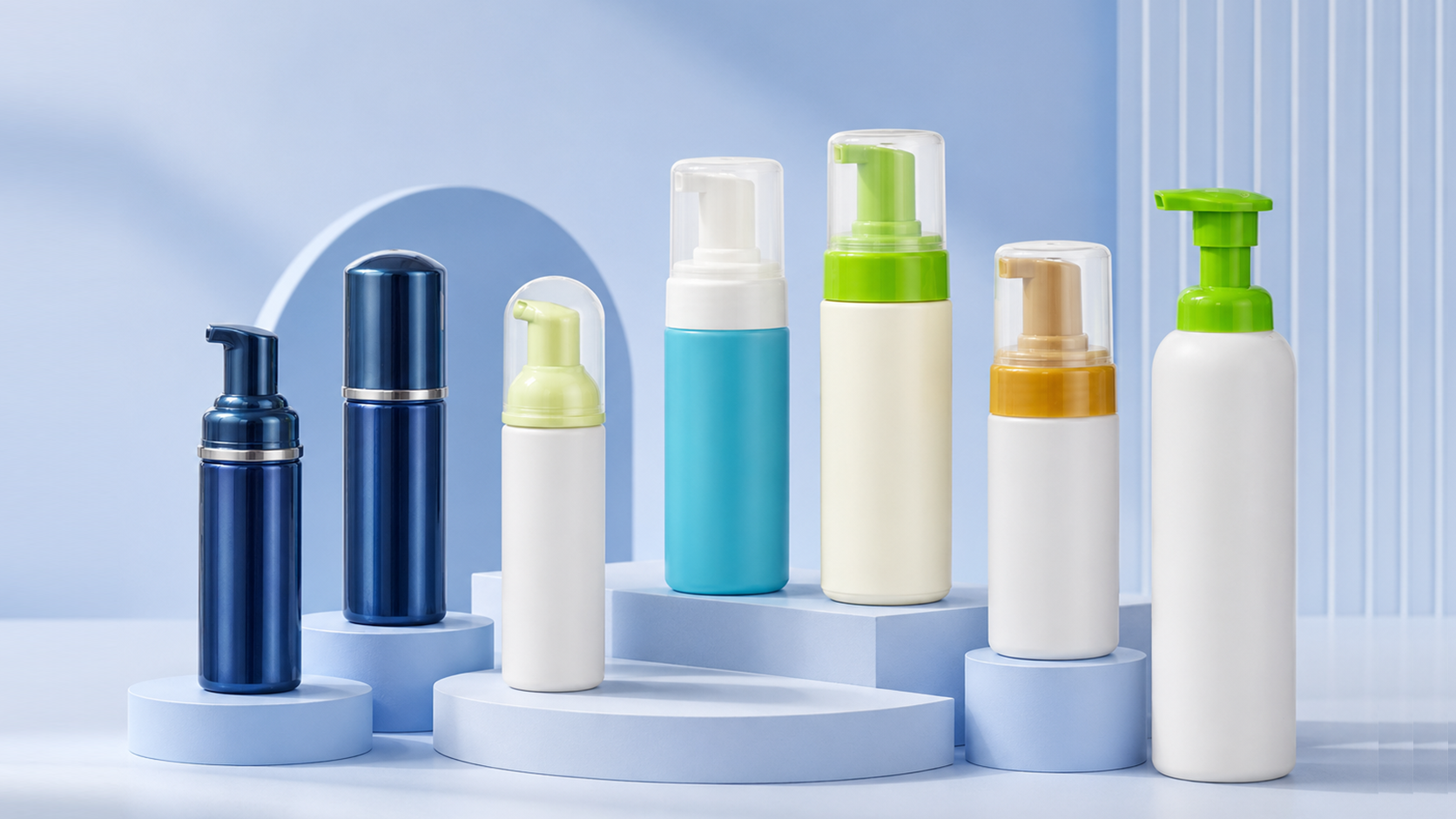
Foam Pump

Delivers rich, creamy foam from liquid soaps, cleansers, and hand sanitizers by mixing liquid with air through a fine mesh screen. Available in multiple fitting types and foam ratios to match different bottle neck designs and formulation viscosities.

Specifications

Foam pumps are available in a broad range of neck sizes, colors, output volumes, and foam densities to suit different product needs. Buyers can choose from standard, luxury high-density, and sustainable options, along with various decoration capabilities to match brand requirements. Dip tube lengths are fully customizable, ensuring a precise fit with the bottle of your choice.

Type

Regular foam, lotion-to-foam, luxury/high-density foam

Output

0.4ml – 1.2ml per stroke

Finish

28/400, 28/410, 30/400, 33/400, 40/400, 43/400, 43/410

Sustainability

APR-certified, 100% recyclable PP/PE materials, PCR-compatible options

Decorations

Electroplating, color spray, metal wrap, hot stamping, silkscreen printing.

Product Gallery

Frequently FAQs

Find quick answers to common questionsabout our products, services, and capabilities.

1. What's the difference between a foam pump and a lotion pump or spray pump?

A foam pump contains an internal mesh screen that mixes liquid with air during actuation, dispensing it as rich foam. A lotion pump dispenses liquid directly, while a spray pump atomizes liquid into a fine mist. The internal structures, mesh screens, and liquid pathways are fundamentally different and not interchangeable — confirm the intended dispensing format before selecting a pump type.

Foam pumps generally work best with low-viscosity formulas (e.g., hand soap, facial cleansers, foaming sanitizers). Formulas that are too viscous can result in uneven foam or difficulty dispensing. It’s best to share your formula’s viscosity data (in cP) with the supplier before ordering, so they can recommend the right mesh configuration and pump structure.

Single-mesh pumps dispense foam faster and cost less, making them suitable for everyday personal care products where foam texture isn’t a top priority. Double-mesh pumps produce finer, denser foam but dispense slightly slower and cost more — typically used for premium cleansers and skincare products. The choice should align with your brand positioning and desired end-user experience.

Common foam pump neck sizes include 28/400, 28/410, 33/400, and 43/400, among others. Always confirm the bottle’s neck inner diameter and thread series (400 vs. 410) before ordering. When in doubt, send a sample bottle or CAD drawing to the supplier to avoid leakage or fitting issues.

MOQs vary by supplier. Standard foam pumps typically start around 10,000–50,000 units, while custom colors, dip tube lengths, or surface decoration (e.g., hot stamping, spray coating) usually require higher MOQs. Clarify customization needs upfront to get an accurate quote and lead time.

Stock standard foam pumps usually ship within 2–4 weeks. Custom tooling, special colors, or decorative finishes can extend lead times to 6–10 weeks. Build in extra time for mold development and sample validation when planning your project timeline.

Many suppliers now offer APR-certified, 100% recyclable PP/PE foam pumps, as well as PCR (post-consumer recycled) material options. If your brand has sustainability commitments or needs to meet specific market regulations (e.g., EU packaging requirements), specify this during the RFQ stage so the supplier can provide the relevant certifications.

Before placing a bulk order, request samples and test them with your actual formula. Key checks include foam texture and fineness, dispensing consistency, actuation feel, and leak resistance. It’s also worth requesting drop-test and actuation-cycle (durability) reports to ensure consistency across mass production.