
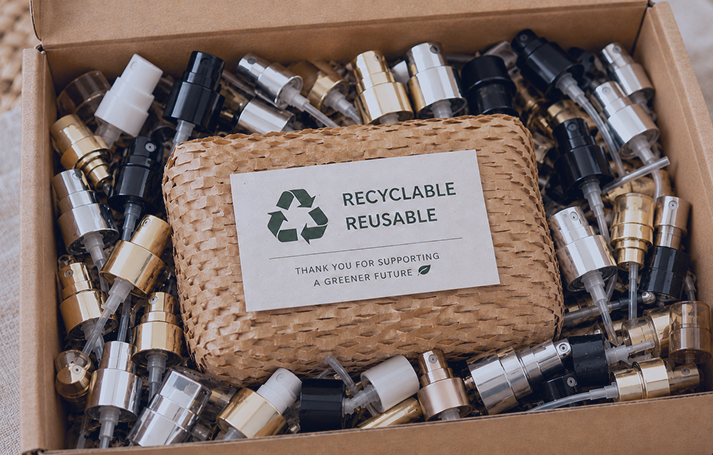
When a customer asks us for a sprayer that doesn’t exist yet — a specific actuator shape for a rebrand, an output volume that falls between our standard options, or a pump insert built for an unusually viscous formula — the conversation doesn’t start with a catalog. It starts with a drawing, a sample request, and a discussion with our tooling engineers about whether the change requires a new mold or a modification to an existing one.
This is, in practical terms, what “innovation” means at a component manufacturing level. It’s less about announcing a breakthrough product and more about maintaining the in-house capability to design, mold, and sample new configurations quickly enough that a customer’s development timeline doesn’t stall waiting on packaging.
Why We Design and Build Molds In-House
A significant share of contract packaging manufacturers outsource mold-making to third-party tool shops. It works, but it adds a step — and every added step adds time and a communication gap between what a customer needs and what the mold actually produces. Sunmart designs and builds molds internally for our pump, sprayer, aluminum can, and plastic bottle lines, which means when a customer’s spec changes mid-development (which happens more often than not), we can adjust the tool directly rather than routing the change through an external vendor.
This is also the reason our product range has grown to nearly 1,000 variants across lotion pumps, crimp pumps, screw pumps, fine mist sprayers, micro aluminum cans, and PP/PE/PET bottles. Very few of these started as speculative additions to a catalog — most exist because a customer needed something specific, and once tooled, it became part of what we offer to the next brand with a similar requirement.
What Custom Development Looks Like in Practice
A typical custom request moves through a few stages: a customer shares a target spec — bottle neck finish, output volume, material, actuator style, or a formula compatibility requirement — and our team evaluates whether an existing mold can be modified or a new one is needed. From there we produce samples for the customer to test with their actual formula and filling line, not just visually approve. Adjustments at this stage are common and expected; a pump that dispenses correctly with water often needs insert or spring adjustments once tested with the real product.
Because we control injection and blow molding for both the dispensing components and the containers, we can also test a custom pump against a custom bottle shape in the same development cycle, rather than validating each independently and hoping they perform together after the fact.
Where Quality Standards Come From
Custom development only matters if the output meets consistent quality and compliance standards, particularly for customers in pharmaceutical and health care packaging where component specifications carry regulatory weight. Sunmart is a member manufacturer of the China Packaging Federation, the China Pharmaceutical Packaging Association, the National Science and Technology Association, the National Environmental Protection Industry Association, and the China Health Care Science Association. These memberships reflect ongoing engagement with the standards bodies and industry practices that shape how packaging components for daily chemical, pharmaceutical, food, and health care products are expected to perform.
Development Capability as a Sourcing Consideration
For brands evaluating packaging suppliers, the ability to modify tooling in-house — rather than routing every change through a third-party mold shop — often determines whether a product launch timeline holds or slips. It’s a less visible part of sourcing than material choice or price per unit, but it tends to matter more once a formula changes late in development, which is closer to the rule than the exception.
If your product requires a pump, sprayer, or container configuration outside our standard catalog, our engineering team can evaluate feasibility and timeline from an initial spec discussion.